What makes an AI leader worth following
I asked a question recently inside the AI Leadership Academy: What is the single most important skill an AI leader needs today?
I asked a question recently inside the AI Leadership Academy: What is the single most important skill an AI leader needs today?
The answers sparked an insightful conversation. And while the responses were varied, the insights all pointed to one deeper truth about what it really takes to lead with AI.
It starts with business value
The clearest signal from the discussion was this. Whatever else an AI leader does, the destination is business value.
One member put it in a way I will not forget. An AI leader is part strategist, part technologist, part storyteller, and part cat herder. The mix changes daily, but the destination is always the same. Business value.
That framing is powerful because it strips away the noise. Leaders can debate architecture, platforms, and models all day. But none of it matters if it does not move the financial jaws.
Boards and executives do not ask for more diagrams. They want to see outcomes that translate to growth, efficiency, or resilience.
But showing value is the easy part
Here is where it gets interesting.
One contributor shared their experience leading AI transformation in their organisation. They pointed out that proving business value is rarely the hardest part. It is obvious to most leaders that AI unlocks significant value. Many use cases are already commoditised, and the rest will follow as the technology matures.
The real challenge is much harder. It is getting people to embrace and use AI in meaningful ways.
It is easy to buy a ChatGPT subscription for every staff member. It is far harder to change the habits, processes, and culture that surround how people work. Inertia and resistance can undo even the best business case.
This is where leadership shows up. Not in the spreadsheet that proves the value, but in the conversations and actions that help teams change the way they work.
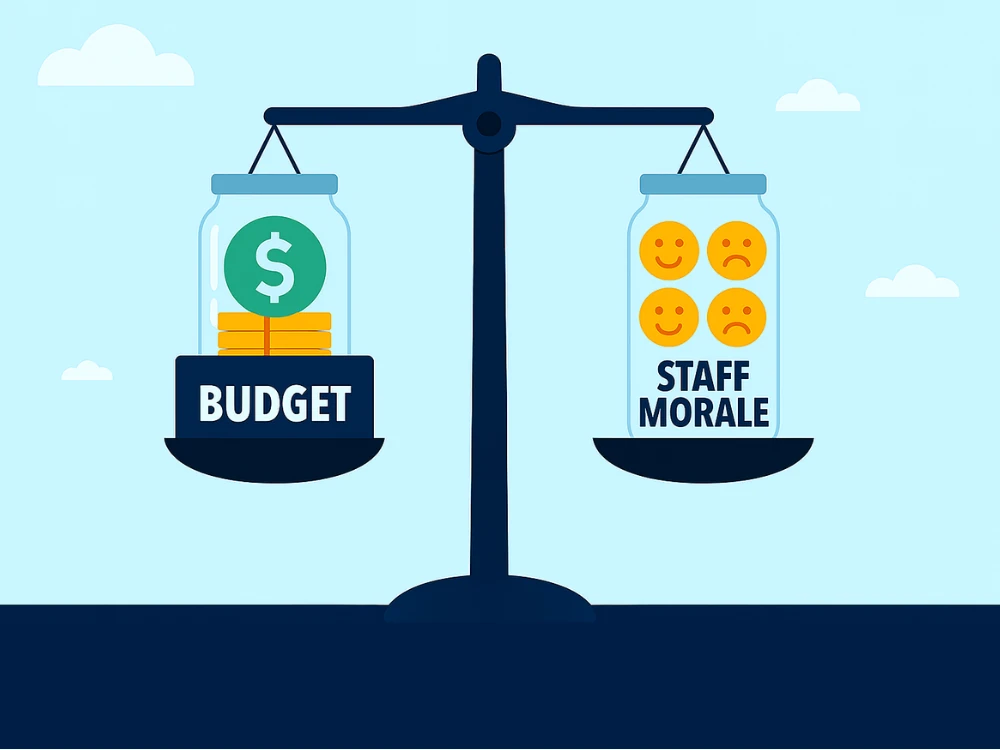
Budgets matter, but people matter more
Another insight came from someone working with budget sensitive organisations such as nonprofits. For them, proving value before spending is non negotiable. They cannot afford to experiment without a clear case for return.
That is true for every organisation in some way. But what stood out to me was the reminder that money is not the only resource that gets exhausted. People do too.
“Sometimes more costly than exhausted budgets is exhausted people.” - Amit Singh
An overworked team without clarity or support will burn out long before the AI delivers results. And when that happens, the costs are higher than any budget overrun. You lose trust, momentum, and capability.
The lesson is simple. Do not just measure the financial cost of AI adoption. Measure the human cost as well.
So what is the skill that matters most?
If you take these conversations together, you end up with a more complete answer.
Translating AI into business value is critical. Driving organisational change is just as critical. Add in adaptability, trust building, and a growth mindset, and you have the real mix of skills.
That is the point. It is not a single skill. It is the ability to blend them and apply them in the right measure at the right time.
Some days that means standing in front of the board and telling a clear story about value created. Other days it means sitting with your teams and helping them work through resistance. And on many days it means shifting your own thinking quickly enough to keep pace with a technology that refuses to slow down.
This is why AI leadership is not about technical depth alone. It is about range.
Why I am sharing this with you
I could have written an article on my own listing the five top skills for AI leaders. But that would miss the richness of real world debate.
The insights above came from peers who are in the trenches, trying to move their organisations forward. They are part of the conversations happening every day inside the AI Leadership Academy.
That is why I share them with you here. Because the best answers rarely come from vendor decks or research reports. They come from leaders who are doing the work and learning as they go.
What this means for you
If you are leading AI in your organisation, ask yourself three questions:
- Are you clear on how AI will deliver business value that your board will recognise and support?
- Are you prepared to do the harder work of helping people change how they work, not just what tools they use?
- Are you building the resilience to keep your teams energised and engaged, not just compliant?
If you can answer yes to all three, you are well on your way to being the kind of AI leader others want to follow.
If you hesitate on any of them, that is where to focus.
Leadership is a discipline
The conversation inside the Academy reminded me of something important.
Leadership is not a trait you are born with or a badge you keep forever. It is a discipline.
It is the practice of showing up consistently, making sense of complexity, and guiding others through it. It is the discipline of asking better questions, holding competing priorities without losing clarity, and building the trust that helps people move forward.
With AI, that discipline matters more than ever. The ground is shifting daily. The leaders who treat leadership as a discipline, something to keep working on and refining, are the ones who will translate AI into outcomes that last.
Those who see leadership only as a title or a role will fall behind.
Join the conversation
If you found value in these insights, you would get even more by joining the conversations yourself. Inside the AI Leadership Academy, leaders are sharing experiences, debating challenges, and building clarity together.
Because the truth is simple. AI leadership is not about having the most answers. It is about asking the right questions and making them count.